
The short answer
One page if you have under about ten years of experience, two pages if you have more or your field expects project or publication lists. Academic CVs and CVs in some countries run longer. Relevance matters more than length: every line should help you get this particular job.
Updated September 30, 2026
Length by career stage
- Students, graduates and first jobs: one page.
- Up to about ten years of experience: one page, or two if the second is full of relevant work.
- Senior, management and technical roles with long project lists: two pages.
- Academic, medical and research CVs: as long as the publications, grants and teaching require.
When two pages are the right call
A second page is fine when it carries relevant achievements, not leftovers. If page two holds only a few lines, either cut back to one page or check whether you've left out something that matters. A page and a quarter looks unfinished.
How to cut a resume that runs long
- Shorten jobs older than ten to fifteen years to a title, employer and dates.
- Remove bullets that describe routine duties and keep the ones with results.
- Trim the summary to three lines.
- Drop sections that don't help for this job: hobbies, references, an old course list.
- Merge similar short roles, such as several contracts through one agency.
- Tighten the layout a little: margins of about 1.5–2 cm and a 10–11 pt font are still readable. Don't go smaller.
How to fill a page without padding
If your resume is short, add substance rather than spacing: a projects section, volunteering, relevant coursework, certifications or languages. A shorter resume that's all relevant is better than a full page of filler.
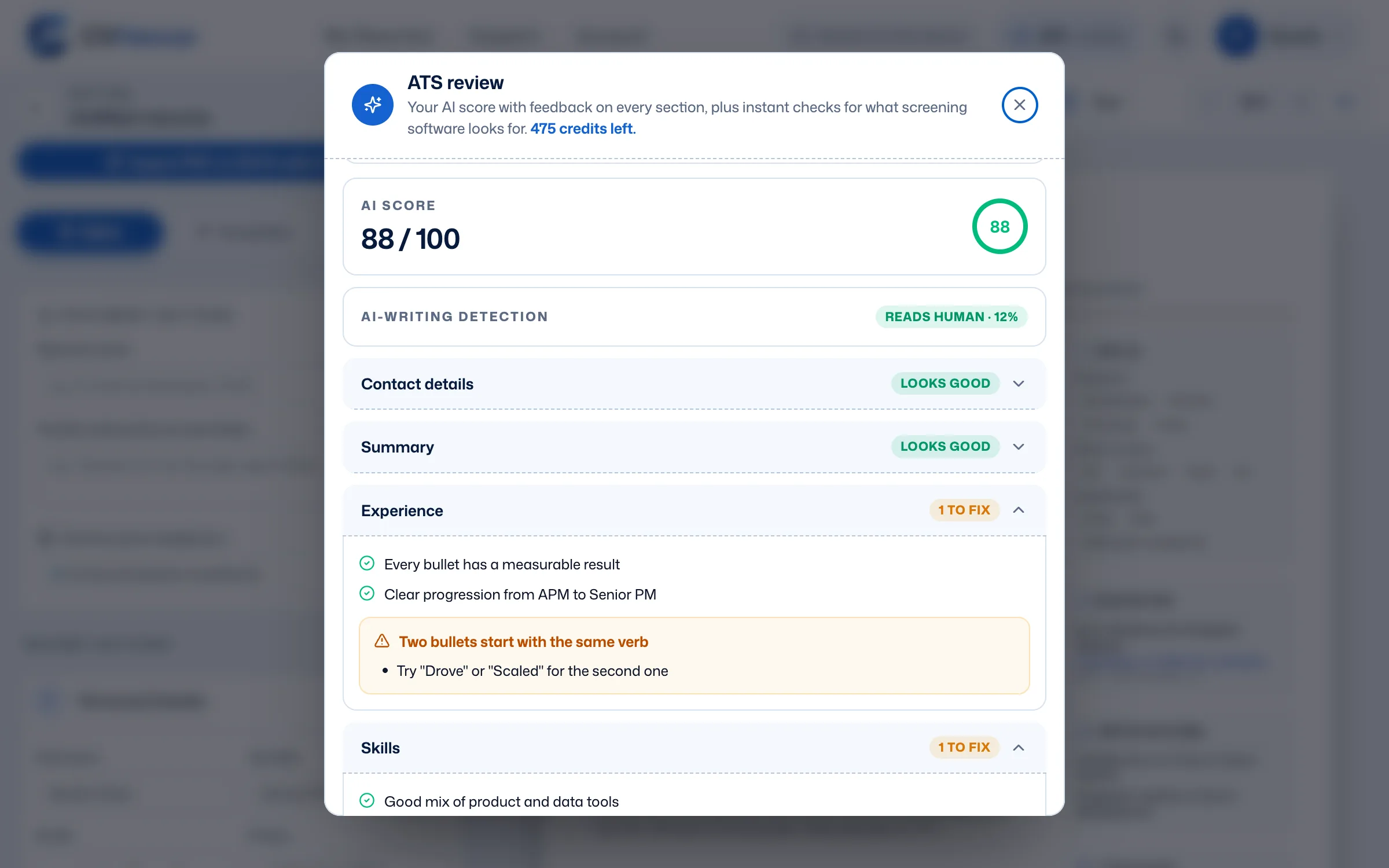
Does resume length matter to an ATS?
No. An applicant tracking system reads two pages as easily as one and doesn't score you on length. Length matters to the person who reads it afterwards, usually quickly, so put the most relevant material in the top half of page one.
Length rules change by country
A US resume is usually one page early in a career. A UK or Australian CV commonly runs to two or more. Some countries expect extra details that take space, such as a photo or personal information. Check the convention for the country you're applying in before you cut or add.
Checklist
- One page under ten years of experience, two at most beyond that
- No page with only a few lines on it
- Older jobs are shortened
- The most relevant material is in the top half of page one
- Font is 10 pt or larger and margins are not squeezed