
The short answer
Start each bullet with an action verb, say what you did, and end with the result, with a number when you have one. Keep each bullet to one or two lines, use three to six per job with the most relevant first, and write past jobs in the past tense.
Updated September 30, 2026
The formula: action, task, result
A duty tells the reader what your job was. A result tells them how well you did it. Most resumes list duties, so bullets that show results stand out.
Responsible for managing social media accounts
Grew Instagram from 4,000 to 19,000 followers in 12 months by posting 5 short videos a week
How to add numbers when you don't work in sales
Almost every job has something countable. If you don't know the exact figure, a careful estimate ("about 40 a week") is fine.
- Volume: customers served, tickets closed, invoices processed, pages written.
- Size: team members, budget, number of sites or accounts.
- Frequency: daily, weekly, per shift.
- Time: hours saved, deadlines met, how fast you delivered.
- Before and after: error rate, waiting time, satisfaction score.
How many bullets per job
- Your current or most recent job: four to six.
- Earlier jobs: two to four.
- Jobs from more than ten years ago: one or two, or just the title and dates.
- Put the bullet most relevant to the job you want first. Many readers stop after two.
Choose the verb and the tense
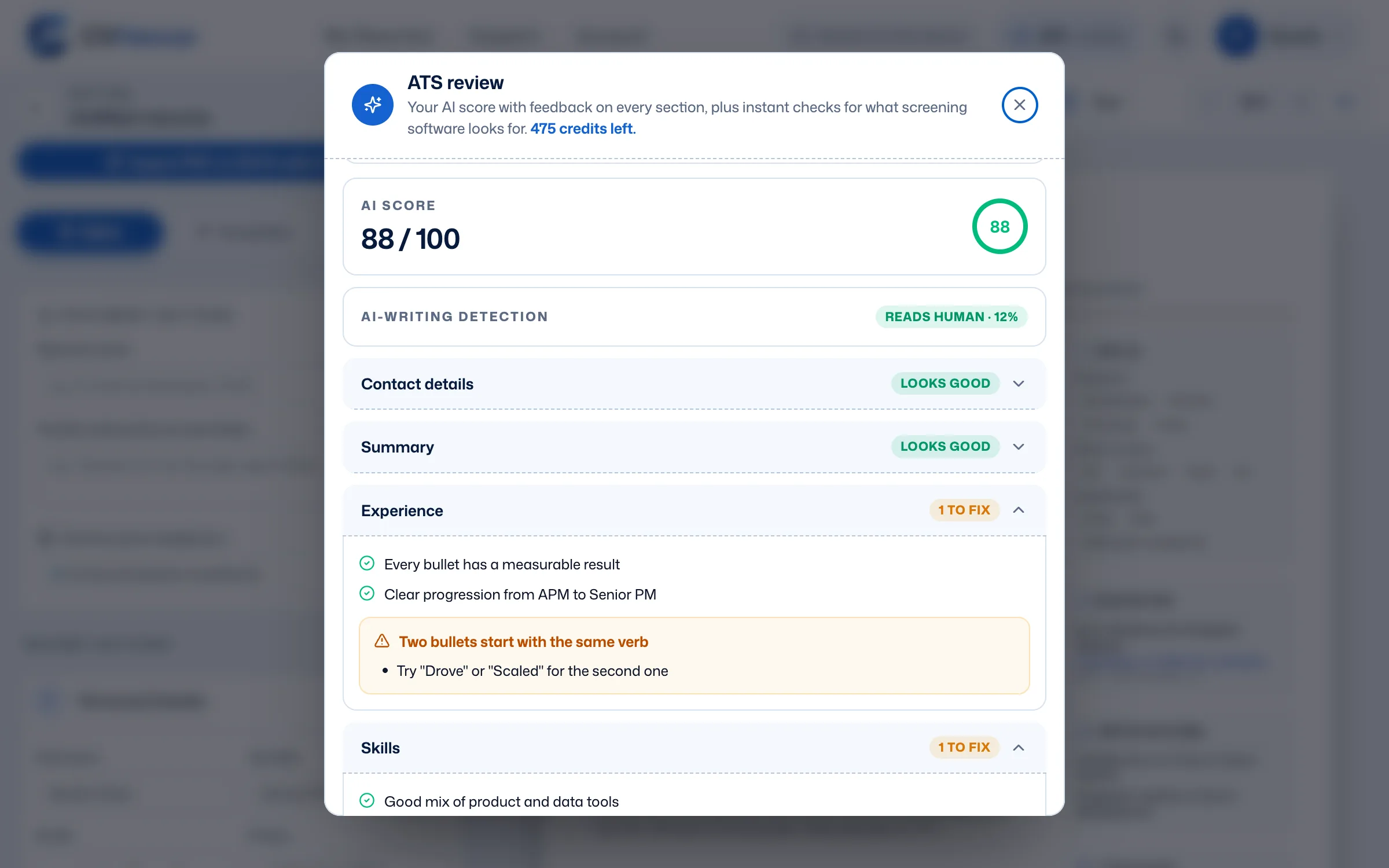
Open with a specific verb: built, reduced, trained, negotiated, launched. Avoid "Responsible for", "Helped with" and "Worked on", which hide what you actually did. Use the past tense for past jobs and the present tense for your current one, and don't repeat the same verb five times.
Helped with onboarding new employees
Trained 14 new hires on the booking system, cutting their ramp-up time from 6 weeks to 4
Work in the job ad's keywords
Where a bullet truly matches a requirement in the ad, use the ad's term for it. If the ad says "stakeholder management" and you wrote "worked with other departments", change it. That's the language both the ATS and the recruiter are scanning for.
Checklist
- Every bullet starts with an action verb
- At least half the bullets include a number or a clear result
- No bullet runs past two lines
- The most relevant bullet comes first in each job
- Tenses are consistent: past for past jobs, present for the current one